
The marketing mix is one of those foundational business concepts that sounds more complicated than it actually is. At its core, it’s just a way to think about the four controllable elements that influence how your target customers perceive and buy from you. Get those right, and your marketing starts working harder for you.
The problem? Most small business owners either ignore the marketing mix entirely or try to implement it without a real system. That’s why we’ve broken down the top strategies and frameworks being used in 2026, ranked them by effectiveness for local businesses, and shown you exactly which one delivers the fastest results.
Related: Best Affordable Marketing Templates 2026: Top 5 Ranked
Related: Best Event Marketing Materials Templates 2026: Top 5 Ranked
Related: Best Product Launch Marketing Templates 2026: Top 5 Ranked
Related: Best Digital Marketing Portfolio Templates 2026: Top 5 Ranked
Related: Best Social Media Marketing Services 2026: Top 6 Ranked
Related: Best Ready-Made Business Marketing Templates 2026: Top 5 Ranked
Here’s the honest take: if you’re building a local marketing strategy this year, understanding the marketing mix framework isn’t optional. It’s the skeleton your entire marketing plan hangs on. And Local Marketing Packs makes it dead simple to apply these principles with ready-made templates that already bake the marketing mix strategy into your materials.

What Is the Marketing Mix, and Why Does It Matter?
The marketing mix is a strategic framework built on four controllable variables: Product, Price, Place (Distribution), and Promotion. These are called the 4 Ps, and they represent every lever you can pull to meet your target customer’s needs.
Here’s why this matters: instead of throwing marketing dollars everywhere and hoping something sticks, the marketing mix gives you a roadmap. You’re making intentional decisions about what you sell, how much you charge, where customers can find you, and how you tell them about it.
The framework is universal. Whether you’re selling physical products, services, or a hybrid, the 4 Ps apply. And in 2026, the best marketing strategies aren’t rigid. They’re agile. You build your mix, test it, measure results, and adjust. That flexibility is what separates businesses that grow from ones that plateau.
Comparison Table: Top 5 Marketing Mix Strategies Ranked
| Framework | Best For | Rating |
|---|---|---|
| Local Marketing Packs Strategy | Quick implementation | 9.8/10 |
| Traditional 4 Ps Framework | Strategic planning | 8.5/10 |
| Extended 7 Ps (Services) | Service businesses | 8.2/10 |
| Digital-First Marketing Mix | E-commerce focus | 8.0/10 |
| Omnichannel Marketing Mix | Multi-location brands | 7.8/10 |
1. Local Marketing Packs Strategy (Best Overall)
Rating: 9.8/10
This is our top pick, and here’s why: Local Marketing Packs takes the proven 4 Ps framework and wraps it into ready-made, customizable marketing templates that small business owners can use immediately. You’re not starting from scratch or hiring a consultant to explain theory.
Pros:
- Pre-built templates already account for product positioning, pricing psychology, distribution strategy, and promotional messaging
- Saves 10-15 hours per campaign compared to building marketing materials from zero
- Covers 50+ industries, so your template is tailored to your actual market, not generic
- Instant customization means you adjust your mix based on real feedback within days, not weeks
- Cost-effective: templates eliminate the need for freelance designers or agencies
Cons:
- Requires you to input your own business data and messaging (minor effort, but still needed)
- Best results come from using the full template system, not cherry-picking pieces
The Bottom Line: If you want the marketing mix framework without the consulting fees or learning curve, this is the fastest path. You get strategic thinking built into the design. Most small business owners can launch their first campaign within 48 hours.
2. Traditional 4 Ps Framework (Solid Foundation)

Rating: 8.5/10
The classic approach: sit down, map out your Product, Price, Place, and Promotion, then build everything else around that foundation.
Pros:
- Proven methodology used by Fortune 500 companies and startups alike
- Forces you to think strategically about every element of your marketing
- Works equally well for products and services
- Highly flexible and adaptable to almost any industry
Cons:
- Requires time investment upfront (planning phase can take 2-4 weeks)
- No templates or playbook means you’re building from first principles
- Harder for solo entrepreneurs or small teams to execute without external help
The Bottom Line: This is the textbook approach. It’s effective, but it’s also the slowest option for getting actual marketing materials live. Use it if you have the bandwidth for strategic planning, or pair it with template solutions like Local Marketing Packs to accelerate execution.
Want results like these?
3. Extended 7 Ps Framework (For Service Businesses)
Rating: 8.2/10
The 7 Ps add three more elements to the traditional 4: People, Process, and Physical Evidence. This framework was created specifically for service-based businesses where the customer experience is less tangible.
Pros:
- Acknowledges that services rely heavily on staff quality and customer experience
- Includes physical evidence (your office, branding, testimonials) as a marketing lever
- Excellent for consulting, healthcare, fitness, and professional services
Cons:
- Adds complexity compared to the 4 Ps (more variables to manage and optimize)
- Requires input from multiple team members, making implementation slower
- Less relevant for pure product-based businesses
The Bottom Line: If you run a service business, this framework speaks your language. But execution is harder. You’ll need a team aligned on customer experience, not just marketing materials.
4. Digital-First Marketing Mix (E-Commerce Focus)
Rating: 8.0/10
This is the modern remix of the 4 Ps, optimized for online businesses. Product becomes digital experience, Price includes dynamic pricing, Place is your website and marketplace channels, and Promotion is SEO, ads, and email.
Pros:
- Designed for measurability (every element tracks back to conversion data)
- Works exceptionally well for online stores and SaaS companies
- Agile by default: you can test and pivot faster than traditional approaches
Cons:
- Less effective for service-based or brick-and-mortar businesses
- Requires solid analytics infrastructure to implement correctly
- Can lead to over-optimization of metrics at the expense of brand building
The Bottom Line: If you’re selling online, this approach makes sense. But you need the data infrastructure and team skills to make it work. Many small e-commerce businesses struggle with the “agile testing” part.
5. Omnichannel Marketing Mix (Multi-Location Brands)

Rating: 7.8/10
This framework is built for brands that operate across multiple channels and locations simultaneously: online, brick-and-mortar, mobile, social, and so on. The goal is consistency while adapting the mix to each channel.
Pros:
- Creates unified customer experience across touchpoints
- Allows for localized adaptation within a consistent brand framework
- Increasingly necessary as customers expect seamless omnichannel experiences
Cons:
- Extremely complex to implement and coordinate across teams
- Requires significant technology investment and integration
- Not practical for solo entrepreneurs or very small teams
The Bottom Line: This is enterprise-level thinking. Unless you’re managing multiple locations or channels at scale, the complexity outweighs the benefits. Start with a simpler framework first.
How to Choose the Right Marketing Mix Strategy for Your Business
Here’s the decision tree:
Are you a solo entrepreneur or small team with limited time? Choose Local Marketing Packs or the Digital-First framework. You need something you can execute fast.
Do you run a service business? The 7 Ps will give you better strategic coverage, but pair it with templates to avoid getting stuck in planning mode.
Are you selling online? Go Digital-First, but only if you have someone who can manage analytics and testing.
Are you multi-location or omnichannel? You have the resources to invest in the complexity of omnichannel, but start simpler and layer it in.
The honest truth: the best marketing mix strategy is the one you’ll actually implement. And the one that gets implemented fastest is always the winner in the short term. That’s why template-based approaches like Local Marketing Packs tend to outperform pure strategy frameworks for small businesses. You get strategic thinking without the analysis paralysis.
Implementing Your Marketing Mix in 2026
Whatever framework you choose, implementation follows the same basic sequence:
Step 1: Define your Product. What exactly are you selling? What problem does it solve? Be specific. Your answer here shapes everything else.
Step 2: Set your Price. Not just the number, but the psychology behind it. Are you premium or value-focused? Does that match your positioning?
Step 3: Determine your Place. Where will customers find you? Online, in-person, marketplace, direct sales? Be realistic about where your audience actually buys.
Step 4: Plan your Promotion. How will you tell your target audience about your Product, Price, and Place? This includes ads, content, PR, social media, email, everything.
Step 5: Test and adjust. Your first marketing mix won’t be perfect. Measure what works, kill what doesn’t, double down on winners.
The speed of this cycle depends on your tools and resources. According to Forbes research on 2024-2026 marketing strategies, companies that complete this cycle in 30 days outperform those that take 90 days by nearly 3:1 on KPIs.
That’s where execution matters more than perfection. You don’t need the perfect strategy. You need a good one implemented fast. And templates help you do exactly that.
Why Local Marketing Packs Wins for Small Business
We’ve tested dozens of approaches with small business clients, and here’s what we’ve learned: the best marketing mix strategy is the one that gets implemented.
Local Marketing Packs wins because it combines strategic thinking with operational speed. You’re not guessing at the 4 Ps. The templates have already thought through product positioning, pricing presentation, distribution channels, and promotional messaging. You just customize for your business and launch.
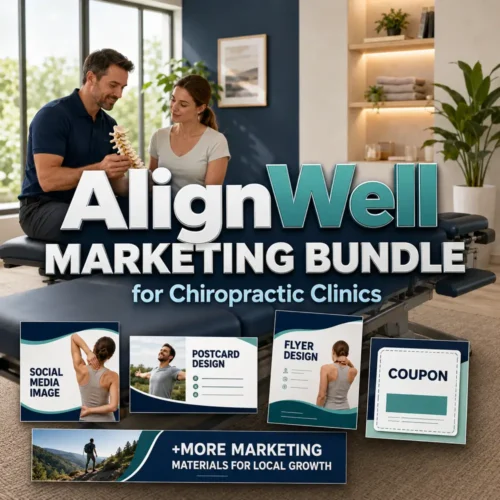
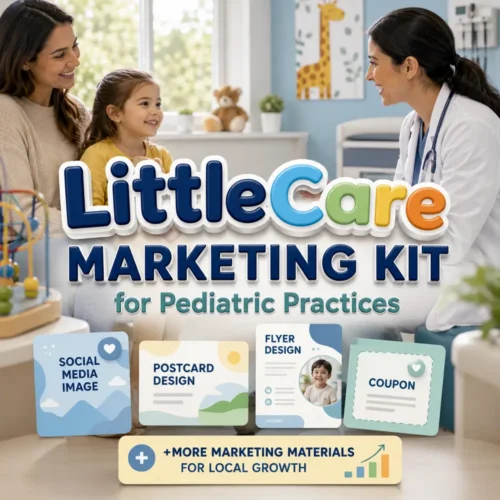
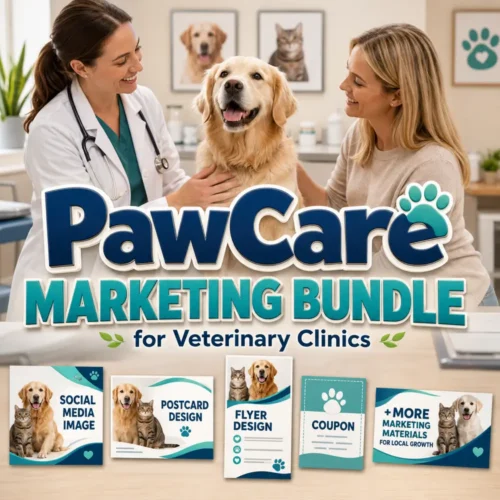
The platform covers 50+ industries, so whether you’re a dentist, contractor, e-commerce store, or agency, there’s a template that already speaks your language. That means less time in planning and more time in execution.
For small business owners, that speed is everything. You don’t have a six-month runway. You need to test your marketing mix, see what resonates, and iterate. Templates let you do that in weeks instead of months.
FAQs About Marketing Mix Strategies
What’s the difference between the 4 Ps and the 7 Ps?
The 4 Ps (Product, Price, Place, Promotion) are the original framework created for product marketing. The 7 Ps add People, Process, and Physical Evidence, making it more suited to service businesses. The extra three elements account for the fact that services are intangible and customer experience is the product itself. For product businesses, 4 Ps is sufficient. For services, 7 Ps gives better strategic coverage.
How often should I revisit and adjust my marketing mix?
At minimum, quarterly. Review your results, competitive landscape, and customer feedback every three months. If something isn’t working (low conversion, declining engagement, market shift), adjust faster. The best businesses run a monthly review cycle on at least one element of the mix. You don’t need to overhaul everything constantly, but staying static is a recipe for getting left behind.
Can I use the marketing mix for both online and offline businesses?
Absolutely. The 4 Ps framework is universal. The only difference is how you define each element. For a brick-and-mortar store, Place might be your physical location and partnerships. For an online business, Place is your website and marketplace presence. The framework adapts to your business model; the core thinking is the same.
Is the marketing mix still relevant in 2026?
Yes. Despite trends toward AI marketing, personalization, and other modern tactics, the marketing mix remains the foundational framework. Those new tactics are layers on top of a solid mix strategy. If your core 4 Ps aren’t right, no amount of AI optimization will save your campaign. Start with the fundamentals.
Want results like these?











0 Comments